by Nick Biemiller | RGS & AWS Forest Conservation Director – Southern Appalachian Region
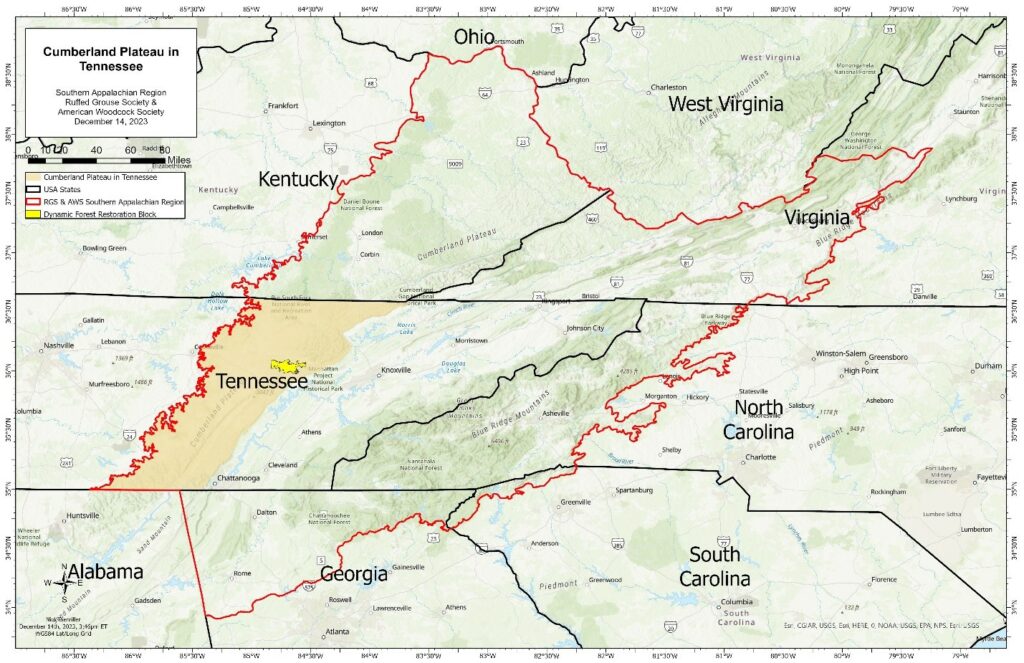
The Cumberland Plateau is located at the southwestern edge of the Appalachian Mountains and includes much of eastern Kentucky and Tennessee with portions of northern Alabama and northwest Georgia. In Tennessee, the Cumberland Plateau is dominated by very flat, dry sites at the top of the plateau known as tablelands, with deep gorges and ravines dropping off the plateau into the Ridge and Valley Ecoregion. The plateau contains one of the largest expanses of continuous forests in the eastern U.S. and is dominated by a variety of oak, hickory and shortleaf pine forest types in the tablelands with mixed moisture loving hardwood forests in the coves of the gorges and ravines. The Cumberland Plateau is also an important flyway for migratory woodcock as they move from their nonbreeding southern wintering grounds to their summer breeding grounds in the Northwoods.
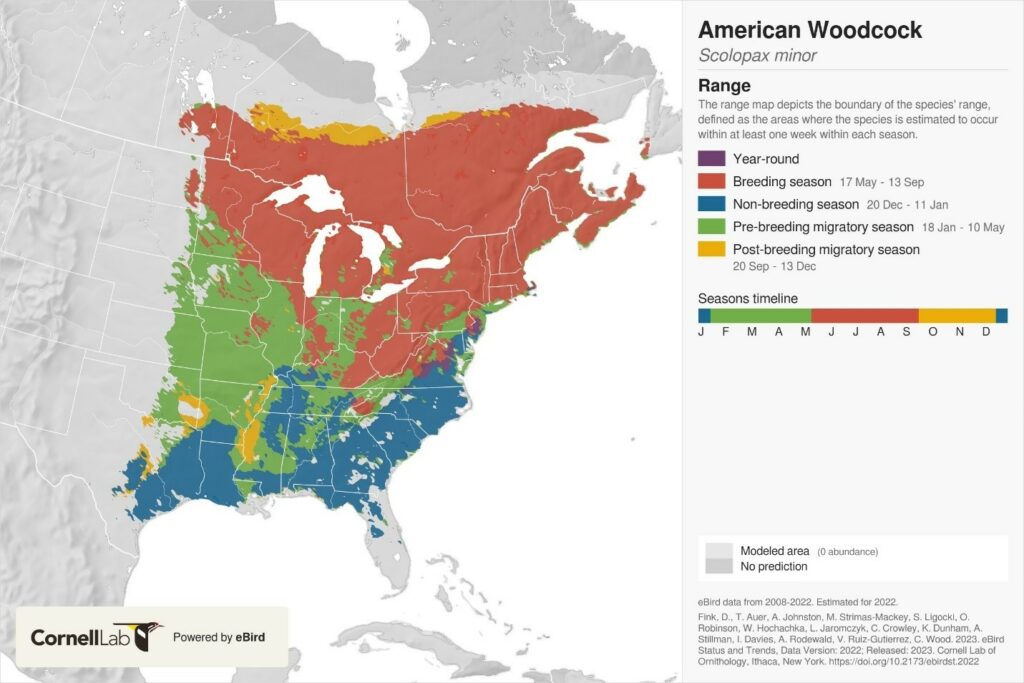
After making the long migratory journey down south after their breeding season in the Northwoods, a portion of the American woodcock population will spend the non-breeding winter season on the Cumberland Plateau from December 20 to January 11. From January 18 to May 10, the Cumberland Plateau provides important stopover habitat during the pre-breeding season as American woodcock populations make their way up north to breed. Evidence suggests that the Cumberland Plateau sees the highest abundance of woodcock during the pre-breeding season.
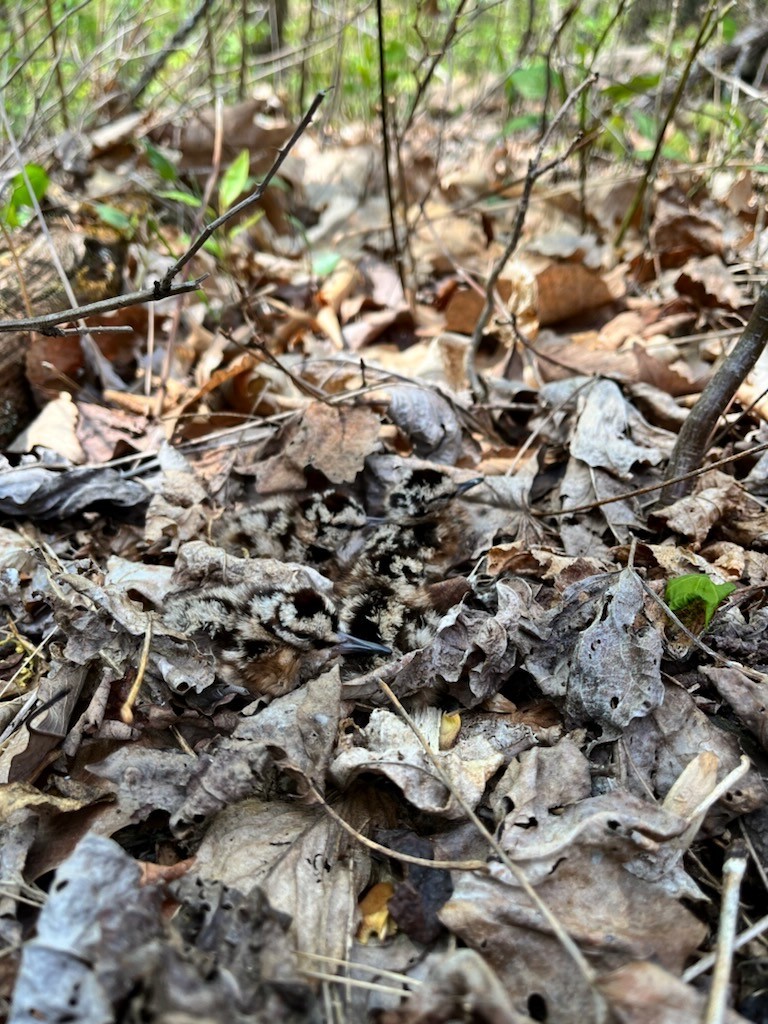
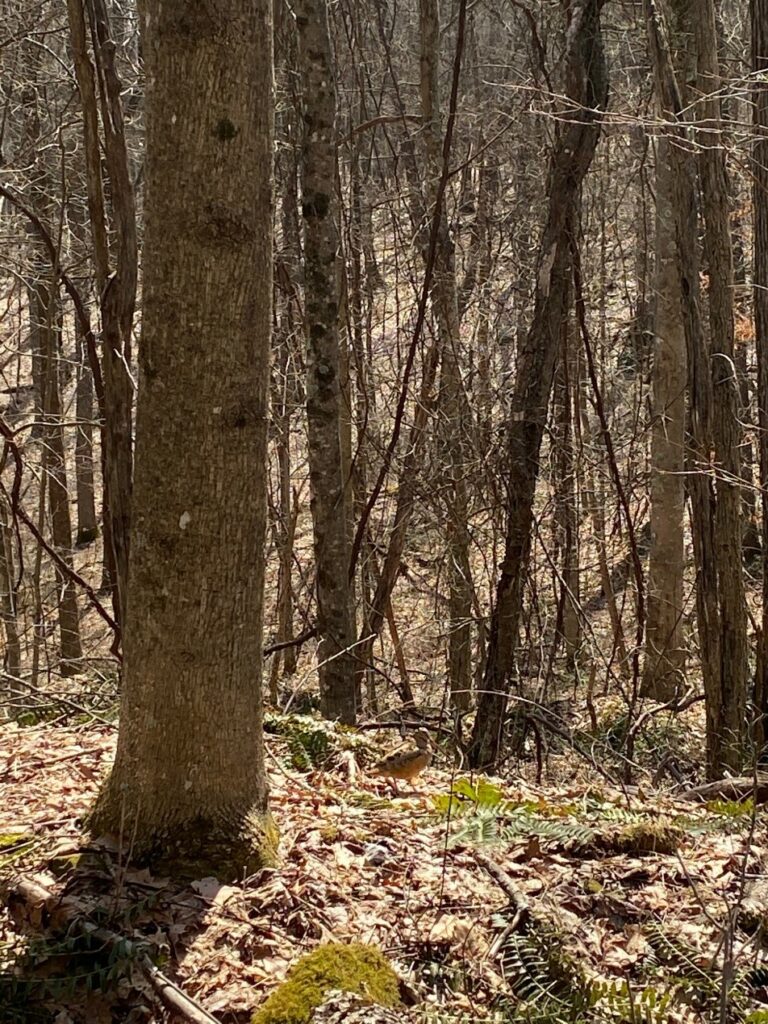
A rare sighting of American woodcock chicks that hatched in the Southern Appalachians. Most woodcock complete their breeding in the Northwoods, but some resident birds stick around and hatch their chicks in the Southern Appalachians. Photo by Charlie Mize, RGS & AWS Forest Wildlife Specialist
To improve habitat for non-breeding and pre-breeding woodcock populations on the Cumberland Plateau, with support from the National Fish and Wildlife Foundation, RGS & AWS has been partnering with the Tennessee Wildlife Resources Agency (TWRA) and the Tennessee Division of Forestry (TDF) to create a Dynamic Forest Restoration Block (DFRB) focal area to benefit ruffed grouse, American woodcock and a broad suite of at-risk wildlife species.
Our DFRB framework is based on diversifying forest habitat conditions at landscape scales to benefit healthy forests and abundant wildlife populations. Over the past two years, RGS & AWS has worked with a coalition of partners to develop a DFRB focal area on the Cumberland Plateau in Tennessee that encompasses portions of the Catoosa Wildlife Management Area and Lone Mountain State Forest across 44,697 acres. In addition to TWRA and TDF, project partners include The Nature Conservancy, Tennessee Wildlife Federation, Copperhead Environmental Consulting and the Appalachian Mountains Joint Venture.
First, through a working group of partners, we developed a wildlife habitat restoration plan for the focal area. This included assessing current habitat conditions and establishing desired habitat conditions to benefit a suite of focal wildlife species, including ruffed grouse, American woodcock, golden-winged warbler, cerulean warbler, wood thrush, northern bobwhite, prairie warbler, elk and wild turkey. What we found is that the landscape is currently dominated by middle-aged and mature forests (80 to 120 years) that are mostly closed canopy with a lack of young, open and very old forest conditions on the landscape. The restoration plan includes strategies and an operational timeline to restore habitat conditions to stabilize or increase population abundances over a 20-year time horizon. Over the next 20 years, the plan outlines a pathway to restore and maintain 6,642 acres of young forest habitat (15% of total area) and 3,985 acres of open forest woodland and savannah habitat (9% of total area).
Table 1. Current age and seral stage distribution
| Age class | Total structural class acres | Percent of total acres | Forest seral stages |
| 0 to 20 years old | 2,640.53 | 5.96% | Young forest |
| 21 to 80 years old | 3,396.75 | 7.67% | Middle aged forest |
| 81 to 120 years old | 35,237.46 | 79.60% | Mature forest |
| 121+ years old | 1,569.13 | 3.54% | Old forest |
| Woodland or savannah | 521.79 | 1.18% | Fire management zone |
| Field or opening | 902.12 | 2.04% | Fields and non-forest |
| TOTAL | 44,268 |
Table 2. Desired future age and seral stage distribution over next 20 years
Next, we began implementing active forest management to achieve desired habitat conditions. RGS & AWS and partners are leveraging resources and increasing capacity to increase the amount of young, open and late successional forest habitat on state lands within the DFRB and on private lands in the surrounding landscape. To date, we’ve completed 461 acres of active forest management on state lands within our DFRB and prepared seven forest management plans for private landowners within 10 miles of the state properties.
Lastly, in summer 2023, we completed baseline monitoring of songbird populations across the DFRB with Eastern Kentucky University. We plan to implement continuous wildlife monitoring as we implement work on the properties to measure trends, test our hypotheses and inform management decisions.
Overall, our DFRB focal area on the Cumberland Plateau in Tennessee will diversify forest structure and ages to create a more healthy and resilient forest that support a diversity and abundance of forest wildlife, especially ruffed grouse and American woodcock. By working together with partners in strategic locations at landscape scales, we can create broader impact and stabilize or reverse the downwards population declines of forest wildlife species. Over time we plan to continue working with partners to implement active forest management within this DRFB and create new DFRBs across the Cumberland Plateau to increase connectivity and abundance of wildlife species at even larger scales!
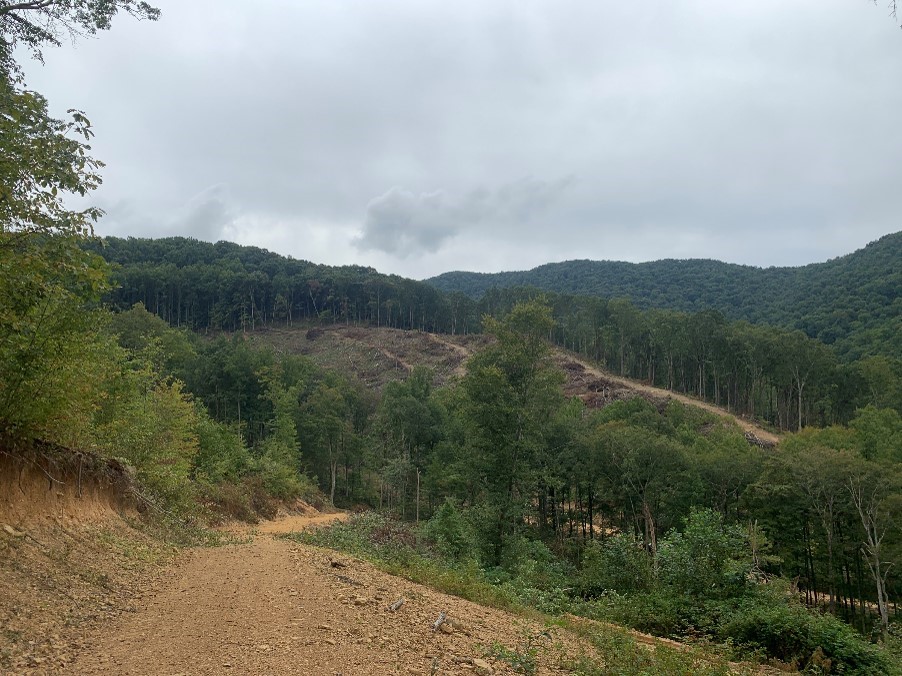
Young forest creation through commercial timber harvesting on the Cumberland Plateau in Tennessee in collaboration with Tennessee Wildlife Resources Agency.